Python樹林– category –
-

Converting Uppercase and Lowercase Strings in Python: Using upper, lower, capitalize, and title
Converting uppercase and lowercase letters is a common task, often used to standardize inconsistent user inputs for email addresses or to format article titles. Python's string type (str) provides several useful methods for performing th... -
Pythonで文字列の大文字・小文字を変換する:upper, lower, capitalize, titleの使い方
ユーザーが入力したメールアドレスの表記ゆれを統一したり、記事のタイトルを見やすく整形したりするために、文字列の大文字・小文字を変換する処理は頻繁に行われます。 Pythonの文字列型(str)には、このような変換を行うための便利なメソッドがいくつ... -
Removing Whitespace in Python Strings: Using strip, lstrip, and rstrip
Text data from user input or files often contains unintended "whitespace" or "newline codes" at the beginning or end. If these are left remaining, they can cause errors when comparing strings or saving data to a database. Python provides... -
Pythonで文字列の空白削除:strip, lstrip, rstripの使い方と注意点
ユーザーからの入力データやファイルから読み込んだテキスト行には、意図しない「空白(スペース)」や「改行コード」が前後についていることがよくあります。これらが残っていると、文字列の比較やデータベースへの保存時に不具合の原因となります。 Pyth... -
Extracting Parts of Strings in Python: How to Use Indexing and Slicing Syntax
When handling strings (str type) in Python, operations such as retrieving a specific single character or extracting a substring from a certain range are frequently performed. We use "Indexing" and "Slicing Syntax" for these operations. T... -
Pythonで文字列の一部を取り出す:インデックスとスライス構文の使い方
Pythonで文字列(str型)を扱う際、特定の1文字だけを取得したり、ある範囲の部分文字列を切り出したりする操作は頻繁に行われます。 これらの操作には、**「インデックス(添字)」と「スライス構文」**を使用します。 この記事では、文字列から必要なデ... -
How to Check if a String Contains a Substring in Python: Using the in Operator and Case-Insensitive Checks
When processing text data, you often need to check if a specific keyword is included. For example, looking for error messages in log files or checking for forbidden terms in user input. In Python, using the in operator allows you to writ... -
Pythonで文字列が含まれているか判定する:in演算子の使い方と大文字・小文字の区別
テキストデータを処理する際、「特定のキーワードが含まれているか」を確認したい場面は頻繁に発生します。例えば、ログファイルからエラーメッセージを探したり、ユーザーの入力に禁止用語が含まれていないかチェックしたりする場合です。 Pythonでは、in... -
How to Replace Strings in Python: Using the replace() Method and Specifying Counts
When processing text data, operations like deleting specific characters or replacing them with other words are very common. Python's string type (str) provides the standard method replace() for this purpose. Using this method, you can ea... -
Pythonで文字列を置換する:replace()メソッドの使い方と回数指定
テキストデータを処理する際、特定の文字を削除したり、別の言葉に置き換えたりする操作は非常に頻繁に行われます。 Pythonの文字列(str型)には、このための標準メソッドとして replace() が用意されています。このメソッドを使うことで、単純な全置換か... -
How to Use Python f-strings: Writing Variable Embedding and Expression Evaluation Concisely
Introduced in Python 3.6, f-strings (formatted string literals) are currently the most recommended way to embed variables and calculations into strings. Compared to the traditional .format() method or the % operator, f-strings reduce the... -
Pythonのf文字列(f-string)の使い方:変数の埋め込みと式評価を簡潔に記述する
Python 3.6で導入された f-string(フォーマット済み文字列リテラル) は、文字列の中に変数や計算式を埋め込むための、現在最も推奨されている記法です。 従来の .format() メソッドや % 演算子と比較して、コードの記述量が減り、可読性が大幅に向上しま... -
String Formatting in Python: Basic Usage of the format() Method and Argument Specification
While f-strings have become the mainstream method for embedding variable values into strings in Python 3.6 and later, understanding the format() method remains essential. It is necessary when managing strings separately as templates or w... -
Pythonの文字列埋め込み:format()メソッドの基本的な使い方と引数の指定方法
Pythonで文字列の中に変数の値などを埋め込む際、Python 3.6以降では f-string が主流になりつつありますが、テンプレートとして文字列を分離して管理する場合や、古いバージョンのPythonコードを読み解く場合には、format() メソッドの理解が不可欠です。... -
Concatenating String Lists in Python: Using join() and Handling Numbers
In Python, situations where you want to combine multiple strings stored in a list into a single string occur frequently. For example, you might want to join them with commas to create CSV data, or connect words with spaces to form a sent... -
Pythonで文字列リストを連結する:join()メソッドの使い方と数値を含む場合の対処法
Pythonでリストに格納された複数の文字列を、ひとつの文字列として結合したい場面は頻繁に発生します。例えば、CSVデータを作成するためにカンマで区切って結合したり、単語のリストをスペースで繋いで文章にしたりする場合です。 このような処理には、文... -
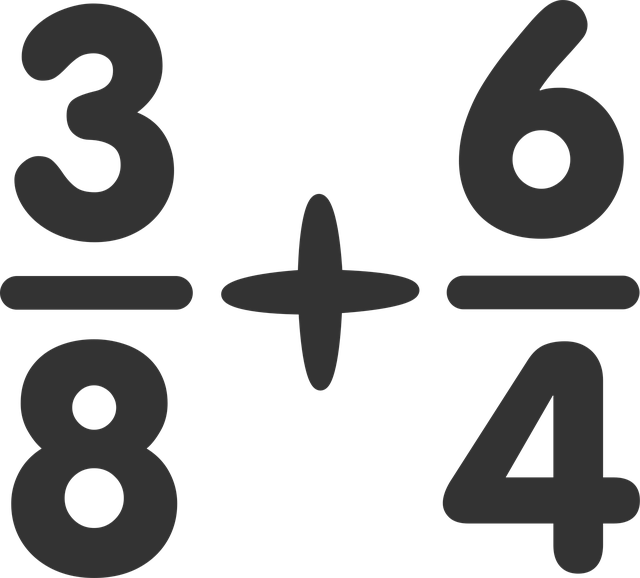
Handling Fractions in Python: Accurate Rational Number Calculations using the fractions Module
When handling decimals in computers, using floating-point numbers (float) can cause errors because numbers like 1/3 become 0.3333... and cannot be represented exactly. If you want to maintain and calculate exact values as mathematical "f... -
Pythonで分数を扱う:fractionsモジュールによる正確な有理数計算
コンピュータで小数を扱う際、浮動小数点数(float)を使用すると、1 / 3 が 0.3333... となり、厳密な計算ができずに誤差が生じることがあります。 数学的な「分数(有理数)」として正確に値を保持・計算したい場合、Pythonの標準ライブラリである fract... -
Rounding, Ceiling, and Floor in Python with Decimal: A Complete Guide to quantize and Rounding Modes
Python's standard round() function adopts "Round half to even" (Banker's rounding), so it may produce results different from the standard "rounding half up" method you learn in school. When you need fractional processing based on strict ... -
PythonのDecimalで四捨五入・切り上げ・切り捨て:quantizeメソッドと丸めモード完全ガイド
Python標準の round() 関数は「偶数丸め(銀行丸め)」を採用しているため、一般的な「四捨五入」とは異なる結果になることがあります。 金融計算など、厳密なルールに基づいた端数処理が必要な場合は、標準ライブラリの decimal モジュールを使用します。... -
Performing Accurate Decimal Calculations in Python: Correct Usage of the decimal Module and Decimal Type
Python's standard floating-point numbers (float type) represent values internally using binary. Therefore, even simple decimals like 0.1 cannot be represented accurately, causing minute "errors" during calculation. In scenarios requiring... -
Pythonで正確な小数計算を行う:decimalモジュールとDecimal型の正しい使い方
Pythonの標準的な浮動小数点数(float型)は、内部的に2進数で値を表現しているため、0.1 のような単純な小数であっても正確に表現できず、計算時に微細な「誤差」が発生することがあります。 金融計算や科学技術計算など、わずかな誤差も許されない厳密な... -
Calculating Trigonometric Functions (sin, cos, tan) in Python: Math Module and Radian Conversion
Whether for physical simulations, statistical processing, or controlling character movement in game development, there are many situations where trigonometric functions (sine, cosine, tangent) are required in programming. Python's standa... -
How to Calculate Logarithms in Python: Using math.log, log10, and log2
Logarithmic calculations are essential for data scaling, calculating information entropy, and implementing physics formulas. The Python standard library math module provides a general-purpose log() function, as well as log10() and log2()... -
Calculating Exponential Functions in Python: Using math.exp() and Implementing the Sigmoid Function
In fields such as scientific computing and machine learning, the exponential function y=ex, with the base e (Napier's number, approx. 2.718), appears frequently. The Python standard library math module provides the math.exp() function to... -
Introduction to Python’s math Module: Using Constants Like Pi, e, and Functions
When creating programs for scientific calculations or geometry, mathematical constants like Pi ($\pi$) and Euler's number ($e$) are frequently used. Python's standard math module allows you to use these constants with high precision. It ... -
Calculating Quotient and Remainder in Python: Using Arithmetic Operators vs divmod
In programming, you often need to find the "quotient" (the answer to division) and the "remainder" (what is left over). Common examples include converting total seconds into "minutes and seconds" or calculating the leftovers when distrib... -
How to Calculate Powers in Python: Differences Between the ** Operator and pow() Function
In scientific and geometric calculations (such as area and volume), you often need to calculate the square, cube, or N-th power of a number. Python provides the ** operator and the built-in pow() function as standard methods for calculat... -
Rounding Numbers in Python: How to Use round() and Why It Is Not Standard Rounding
In programming, you often need to round decimal numbers to a specific position or approximate large numbers (e.g., changing 12,345 to 12,000). Python provides the built-in round() function for this purpose. However, this function behaves... -
Basic Functions for Analyzing Numbers in Python: How to Use abs, sum, max, and min
When performing data analysis or numerical calculations, you often need to find basic metrics like absolute values, sums, maximums, and minimums to understand the "magnitude" or "trends" of your data. Python provides convenient built-in ...