Overview
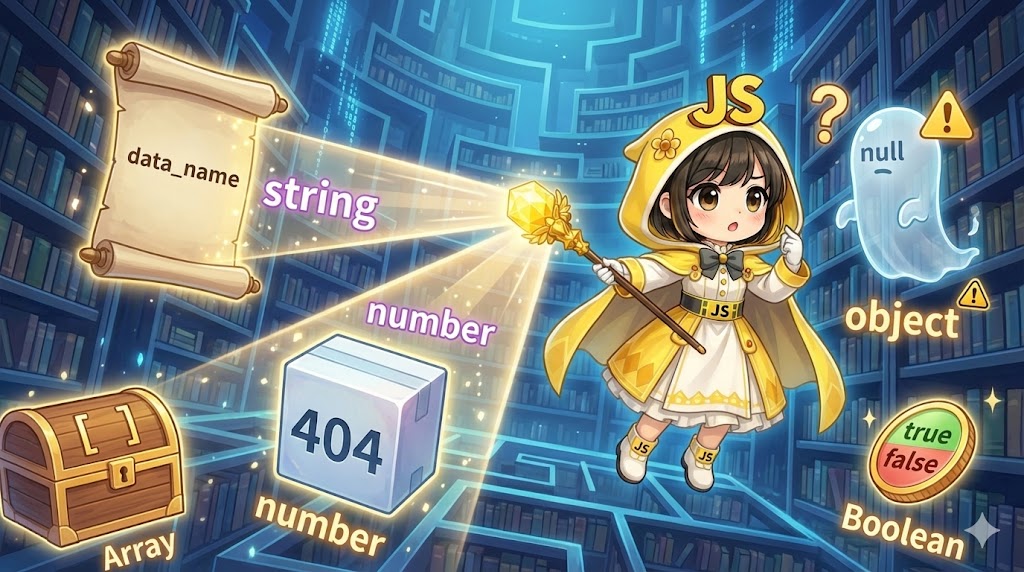
The instanceof operator in JavaScript is a critical tool for determining whether an object inherits from a specific constructor’s prototype. While typeof is useful for identifying primitive data types, instanceof excels at pinpointing the origin of complex objects or custom classes. This allows developers to prevent runtime errors caused by unexpected data structures, ensuring type safety in object-oriented designs where inheritance is a core component.
Specifications (Input/Output)
Basic Syntax
| Syntax | Meaning | Return Value |
| object instanceof constructor | Checks if the prototype property of the constructor appears anywhere in the prototype chain of the object. | true if matched; false if not matched or if the target is not an object. |
Basic Usage
To use the operator, place the object being tested on the left side and the class name or constructor function on the right. This returns a boolean value that verifies compatibility not only with standard objects but also with custom classes and built-in structures like Arrays or Error objects.
Full Code Implementation (HTML / JAVASCRIPT)
HTML
<!DOCTYPE html>
<html lang="en">
<head>
    <meta charset="UTF-8">
    <title>Enterprise Task Management</title>
</head>
<body>
    <div id="management-system">
        <h2>Business Task Processing Console</h2>
        <div id="console-output">
            <p>System Standby...</p>
        </div>
        <hr>
        <button id="btn-process-standard">Execute Standard Task</button>
        <button id="btn-process-urgent">Execute Urgent Task</button>
        <button id="btn-process-invalid">Inject Invalid Data</button>
    </div>
    <script type="module" src="main.js"></script>
</body>
</html>
JavaScript
/**
 * Base task class for the business system
 * Managed by: mori
 */
class WorkTask {
  /**
   * @param {string} title - The name of the task
   */
  constructor(title) {
    this.title = title;
    this.operator = "mori";
  }
}

/**
 * Task class for urgent responses inheriting from WorkTask
 */
class UrgentTask extends WorkTask {
  /**
   * @param {string} title
   * @param {number} priority
   */
  constructor(title, priority) {
    super(title);
    this.priority = priority;
  }
}

const outputElement = document.getElementById('console-output');

/**
 * Validates if the input object is a proper task class before processing
 * @param {any} taskObject - The object to be evaluated
 */
const executeTask = (taskObject) => {
  // Validate using inheritance relationships
  if (taskObject instanceof WorkTask) {
    const typeLabel = taskObject instanceof UrgentTask ? "【URGENT】" : "【STANDARD】";
    const message = `Processing: ${typeLabel} ${taskObject.title} (Assigned to: ${taskObject.operator})`;

    outputElement.textContent = message;
    console.log(message);
  } else {
    outputElement.textContent = "Error: Processable data type not detected.";
    console.error("Validation Error: Object is not an instance of WorkTask.");
  }
};

// Event Listener setup
document.getElementById('btn-process-standard').addEventListener('click', () => {
  const standard = new WorkTask("Generate Routine Report");
  executeTask(standard);
});

document.getElementById('btn-process-urgent').addEventListener('click', () => {
  const urgent = new UrgentTask("Server Outage Response", 1);
  executeTask(urgent);
});

document.getElementById('btn-process-invalid').addEventListener('click', () => {
  // Plain object literal (not an instance of WorkTask)
  const invalidData = { title: "Fake Task", operator: "unknown" };
  executeTask(invalidData);
});
Customization Points
- Expand the logic by defining multiple sub-classes (e.g.,
ProjectTask,MaintenanceTask) and usinginstanceofas a guard clause to safely invoke methods unique to those classes. - Consider modifying the validation logic to verify specific user permissions by checking properties like
operatoralongside the class type.
Important Considerations
- Because
instanceoftraverses the prototype chain, it returnstruefor parent classes as well. If you require a strict check for an exact class match, consider comparing theconstructorproperty directly. - Primitive types (such as numeric or string literals) will always return
falsewhen checked withinstanceof. - Be cautious when working across different execution environments (Realms), such as multiple
iframesor windows, as objects generated in one realm may not be recognized as instances of a constructor defined in another.
Advanced Applications
A common implementation pattern involves routing error handling based on the specific type of error object encountered.
/**
 * Routing logic for custom exception handling
 * @param {Error} error
 */
const handleError = (error) => {
  if (error instanceof TypeError) {
    console.warn("Type mismatch detected. Please verify input data.");
  } else if (error instanceof ReferenceError) {
    console.error("Undefined reference detected in the execution flow.");
  } else {
    console.error("Unexpected error occurred:", error.message);
  }
};
Summary
By utilizing the instanceof operator, developers can implement logical type checking based on class structures rather than relying on the loose property checks typical of plain objects. This distinction between simple object literals and class instances designed for a specific architecture enhances the reliability of data handled by your functions, particularly in large-scale applications. Implementing validation logic that respects the prototype chain allows for sophisticated patterns like polymorphism and secure exception handling, ultimately leading to a more stable and maintainable codebase.